Guide · wood
Wood for Resin Tables
Oak and ash are the Irish hardwoods most used for resin tables. Walnut is the dark favourite but nearly always imported, and elm and spalted beech are the rare Irish slabs. Walnut slabs cost 50 to 80% more than oak or ash.
Each wood, what it looks like, where Irish slabs come from, and why the slab must be dry.
Free, no obligation. One Irish maker gets your design, not a list.
- 5woods compared
- 50–80%more for walnut than oak or ash
- 2012ash dieback confirmed in Ireland
- Drythe slab, before any resin
Design your table
Design your resin table
Eight quick questions. The sketch changes as you pick. When you send it, one Irish resin table maker gets your design and comes back to you with a price.
Step 1 of 3
Step 2 of 3
Drawing your table. This takes 20 to 50 seconds.
Your request is already through, so you can close this page if you need to.
That's an AI concept, not a drawing to build from. Every slab is different: the maker shows you the real boards before anything is cut.
We couldn't do this one. Some photos don't work: a clearer, wider shot in daylight usually does.
Your request is in: you'll still get a call with a price.
Compared
Five woods side by side
| Wood | Looks | In Ireland | Price guide |
|---|---|---|---|
| Oak | Honey brown, strong grain, hard wearing | Native; Irish oak slabs come up | For 6: €1,800–€3,200 |
| Ash | Pale cream to light tan, straight grain | Native; ash dieback (in Ireland since 2012) means much is being felled | For 4: €1,200–€2,000 |
| Elm | Mid brown, wild swirling grain | Dutch elm disease took most mature elms: slabs are scarce | €2,000–€5,000+ |
| Walnut | Dark chocolate, rich figure | Not native: nearly always imported | For 6: €2,500–€4,500 |
| Spalted beech | Pale with dark fungus lines | Planted, not native; from fallen and storm-damaged trees | River table: €4,000–€5,100 |
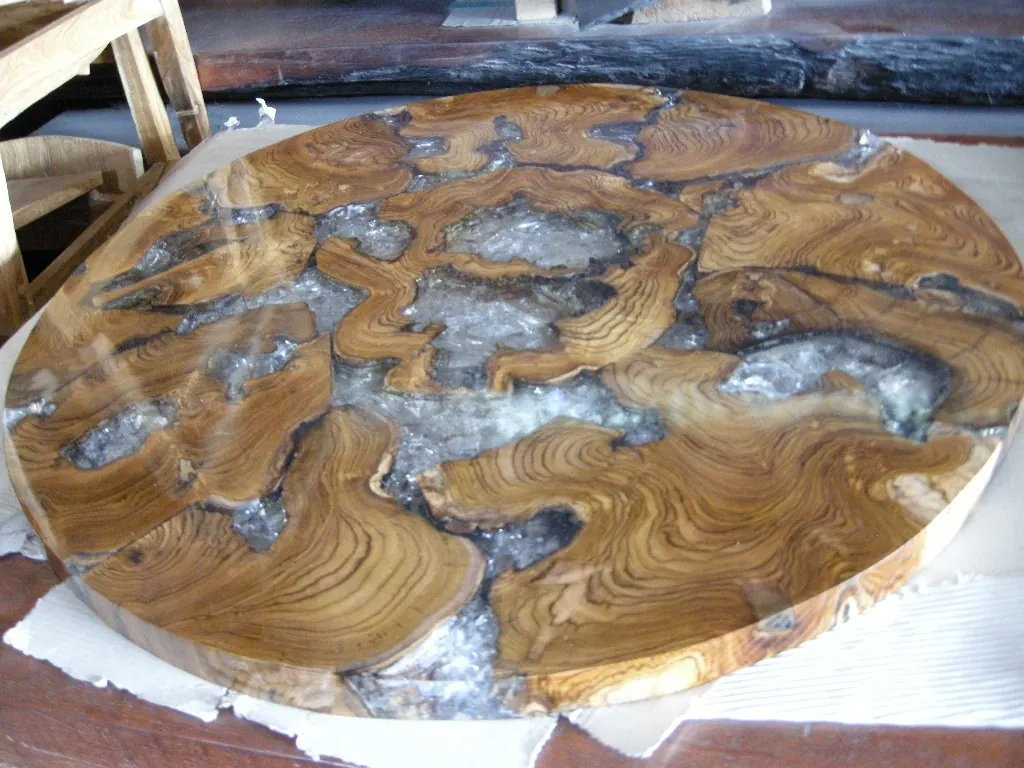
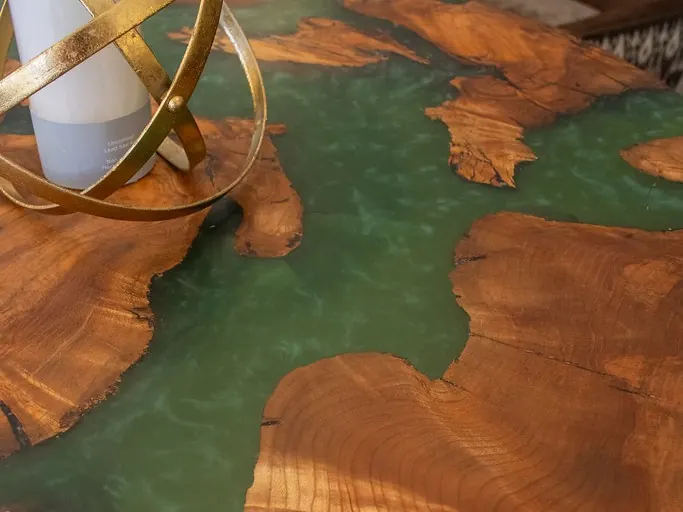
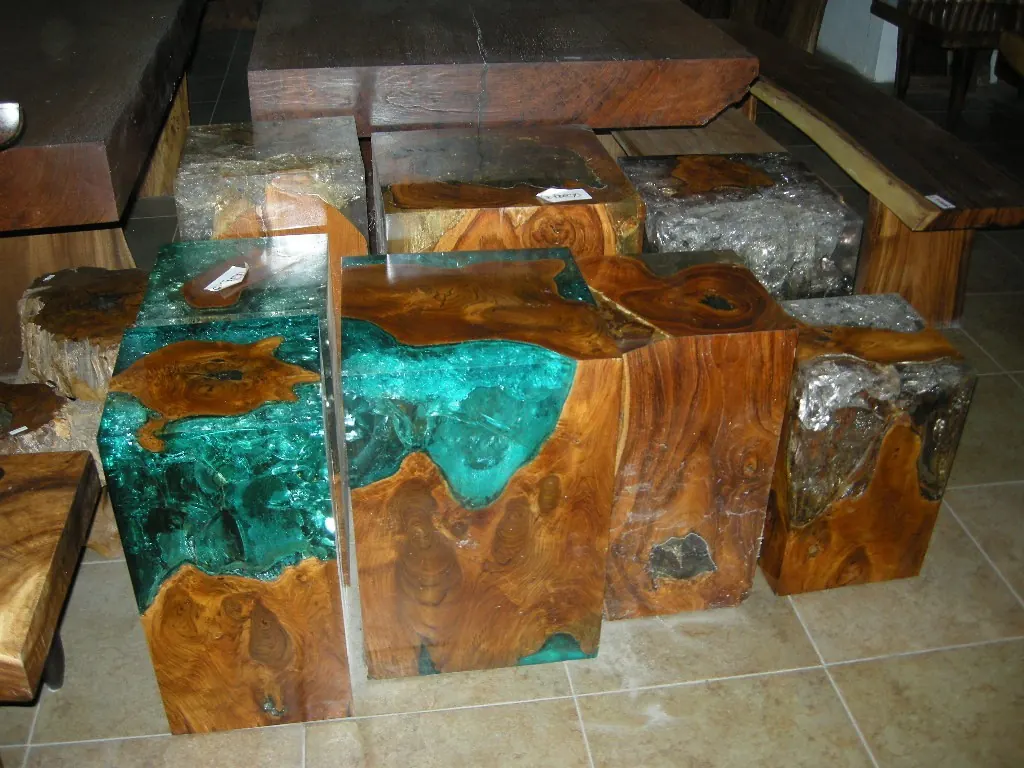
Every slab differs from the next, even from the same tree. The wood sets the colour, the grain and most of the price; the resin sets the style.
Dry first
Why the slab must be dry
A slab has to be properly air-dried or kiln-dried before it meets resin. Wet wood keeps moving as it dries: it shrinks, it can pull away from the resin, and moisture under a pour causes bubbles. Resin makers say it plainly: the wood must be thoroughly dried and seasoned.
Ask the maker how the slab was dried and for how long. Air-drying a thick slab takes a long time, which is one reason good dry slabs cost what they do.
Spalted wood (the dark lines are fungus) is soft in places, so a maker stabilises and seals it before the resin goes in.
Resin tables
More on resin tables
Every table is made to order around real slabs. Start with the one you want.
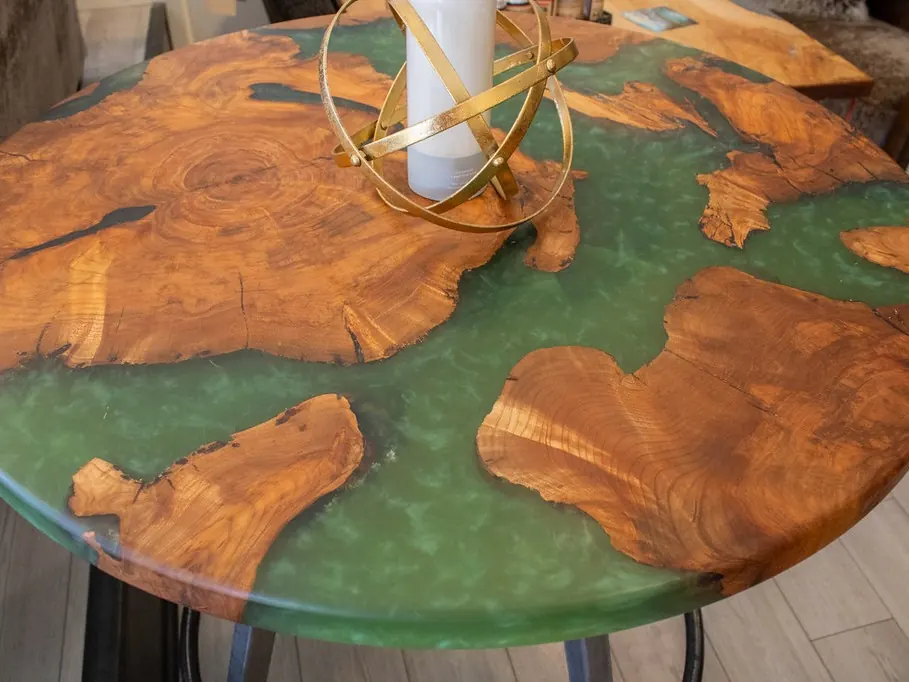 River tablesTwo live edge slabs with resin poured between them. A 2.5 m river dining table: €4,000–€5,100.River tables →
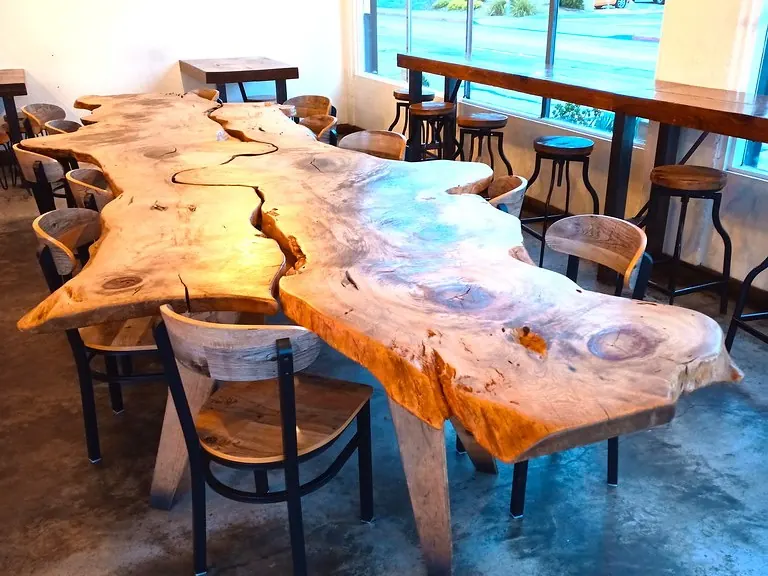 Resin dining tablesTables for 4 to 10. Live edge for 6 in oak: €1,800–€3,200 before resin.Dining tables →
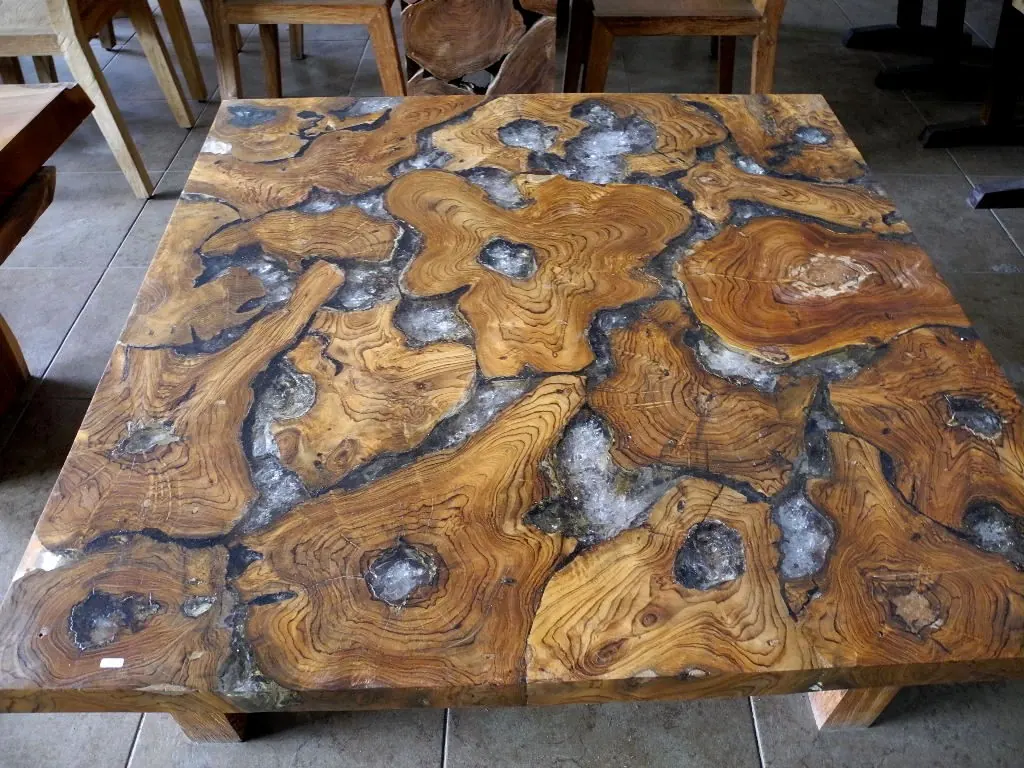 Resin coffee tablesThe way most people start. Irish made, about 90 cm: €450–€550.Coffee tables →
 Epoxy resin for tablesCasting resin, pour depths, curing, heat, scratches and yellowing.Resin facts →
 Care and maintenanceCleaning, mats, sunlight, oiling the wood and polishing out scratches.Care →
 Custom or a DIY kitWhat a kit really takes, and which tables are worth doing yourself.Custom or DIY →
Questions
Questions we get asked
What wood is best for a resin table?
Oak or ash for a hard-wearing everyday table; walnut for a dark, rich look; elm or spalted beech for wild grain. All must be dry.
Is walnut Irish?
Walnut isn't native to Ireland, and Irish-grown walnut is rare. Most walnut slabs are imported.
Why is Irish ash easy to get?
Ash dieback was confirmed in Ireland in 2012, and many ash trees are being felled because of it.
Why must the wood be dry?
Wet wood shrinks as it dries and can pull away from the resin or cause bubbles under a pour.
Can I see the slab before it's made?
Yes, and you should. A good maker sends photos or has you in to pick the slab, because no two are alike and the grain decides the look of the whole table.
Design your resin table
One Irish maker gets your design and comes back with a price. Nothing is ordered until you say yes.