
Guide · care
Resin Table Care
Wipe a resin table with a soft cloth and warm water with a drop of washing-up liquid. Use mats and coasters, because cured resin softens at about 40 to 60°C; keep it out of strong direct sun; and re-oil the wood when it looks dry. Fine scratches polish out.
Everyday care, and what to do about marks and scratches.
Free, no obligation. One Irish maker gets your design, not a list.
- 40–60°Cwhere table resin starts to soften
- Matsfor anything hot
- Soft clothand warm soapy water
- No sunstrong, direct, all day
Design your table
Design your resin table
Eight quick questions. The sketch changes as you pick. When you send it, one Irish resin table maker gets your design and comes back to you with a price.
Step 1 of 3
Step 2 of 3
Drawing your table. This takes 20 to 50 seconds.
Your request is already through, so you can close this page if you need to.
That's an AI concept, not a drawing to build from. Every slab is different: the maker shows you the real boards before anything is cut.
We couldn't do this one. Some photos don't work: a clearer, wider shot in daylight usually does.
Your request is in: you'll still get a call with a price.
Every day
Do and don't
| Do | Don't |
|---|---|
| Wipe with a soft cloth, warm water and a drop of washing-up liquid | Scouring pads or abrasive creams |
| Use mats and coasters for anything hot | Hot pans, plates or mugs straight onto the resin |
| Keep it out of strong direct sun | Leave it in a sunny window all summer |
| Re-oil the wood when it looks dry | Solvents such as acetone or nail polish remover on the finish |
| Polish out fine scratches | Leave it outside |
Marks and scratches
When it gets a mark
Fine scratches in the resin polish out with a polishing compound. Deeper ones, or a heat mark, can be sanded back and re-polished: ask the maker who made it, because they know the finish.
The wood wants a fresh coat of its oil or hardwax oil now and then, more often on a table that's wiped every day.
Resin tables
More on resin tables
Every table is made to order around real slabs. Start with the one you want.
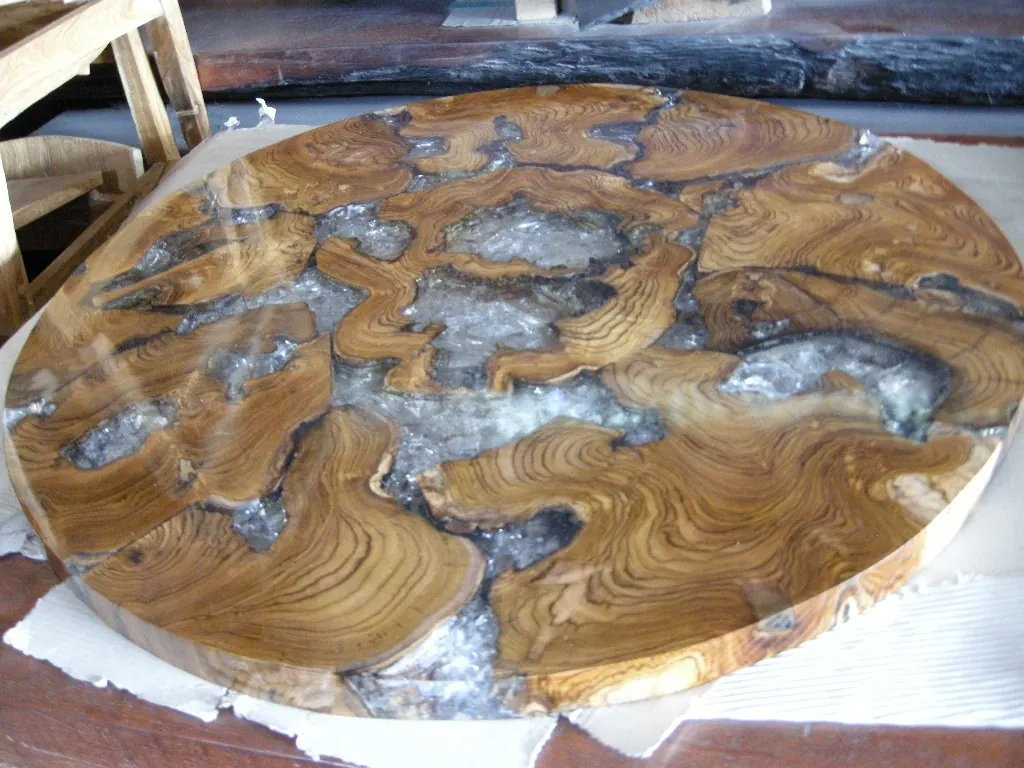 Epoxy resin for tablesCasting resin, pour depths, curing, heat, scratches and yellowing.Resin facts →
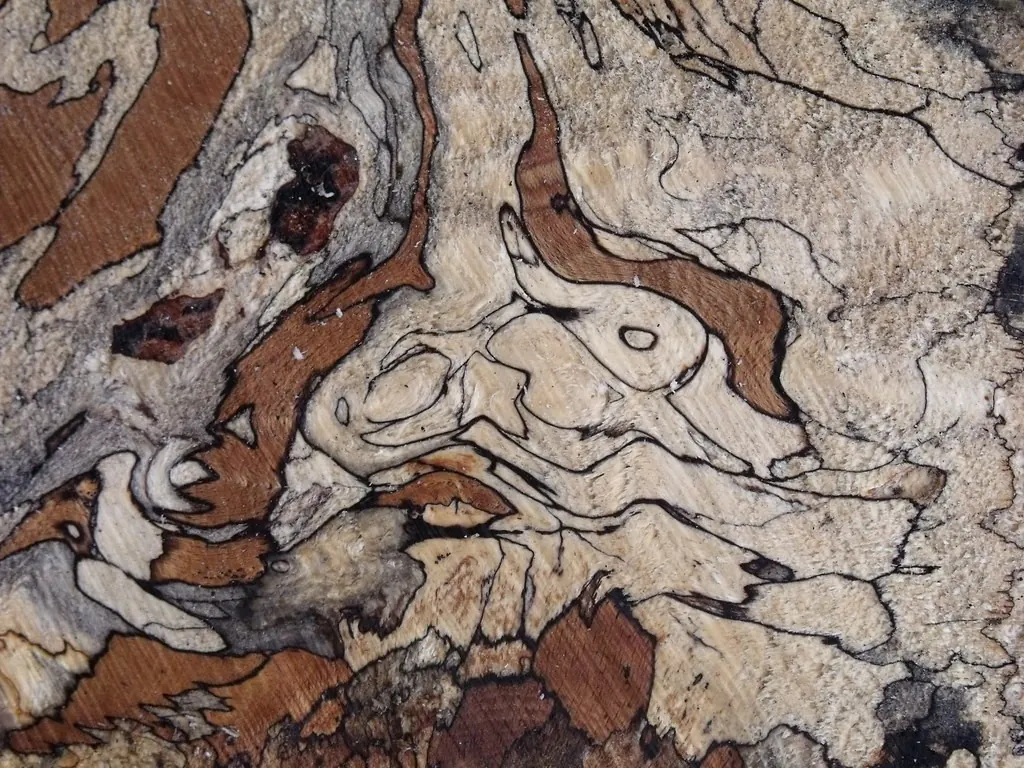 Wood for resin tablesOak, ash, elm, walnut and spalted beech: which Irish slabs, and what each costs.Wood choices →
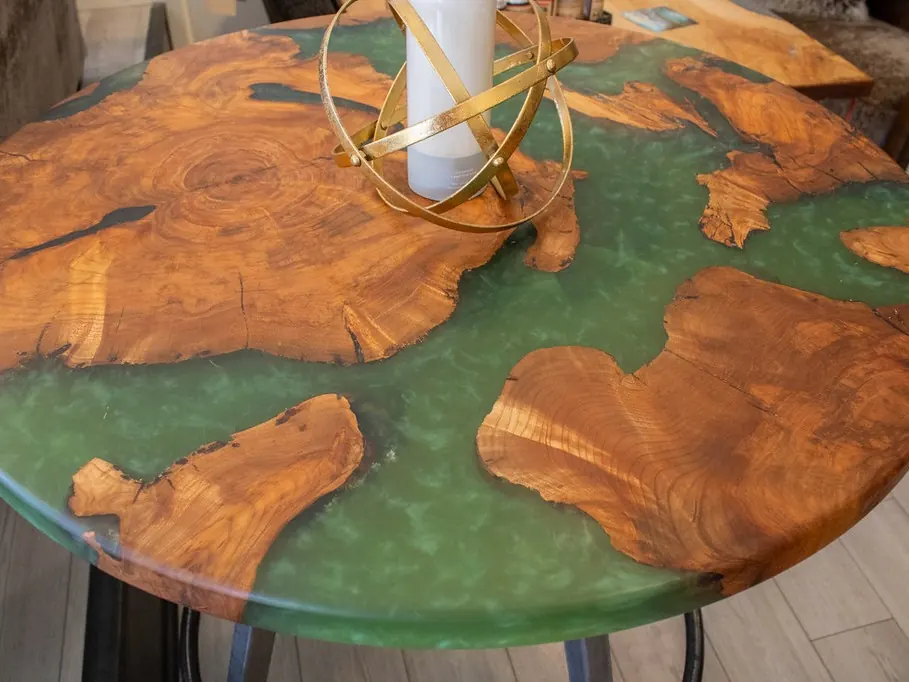 River tablesTwo live edge slabs with resin poured between them. A 2.5 m river dining table: €4,000–€5,100.River tables →
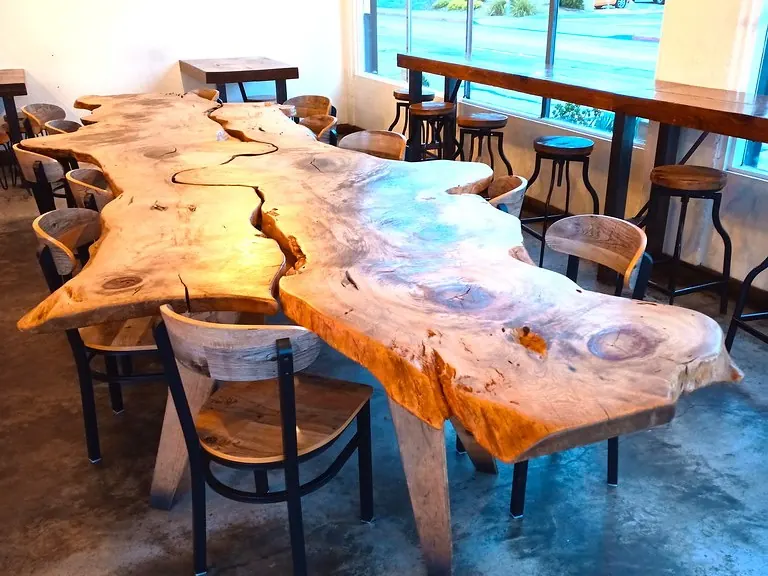 Resin dining tablesTables for 4 to 10. Live edge for 6 in oak: €1,800–€3,200 before resin.Dining tables →
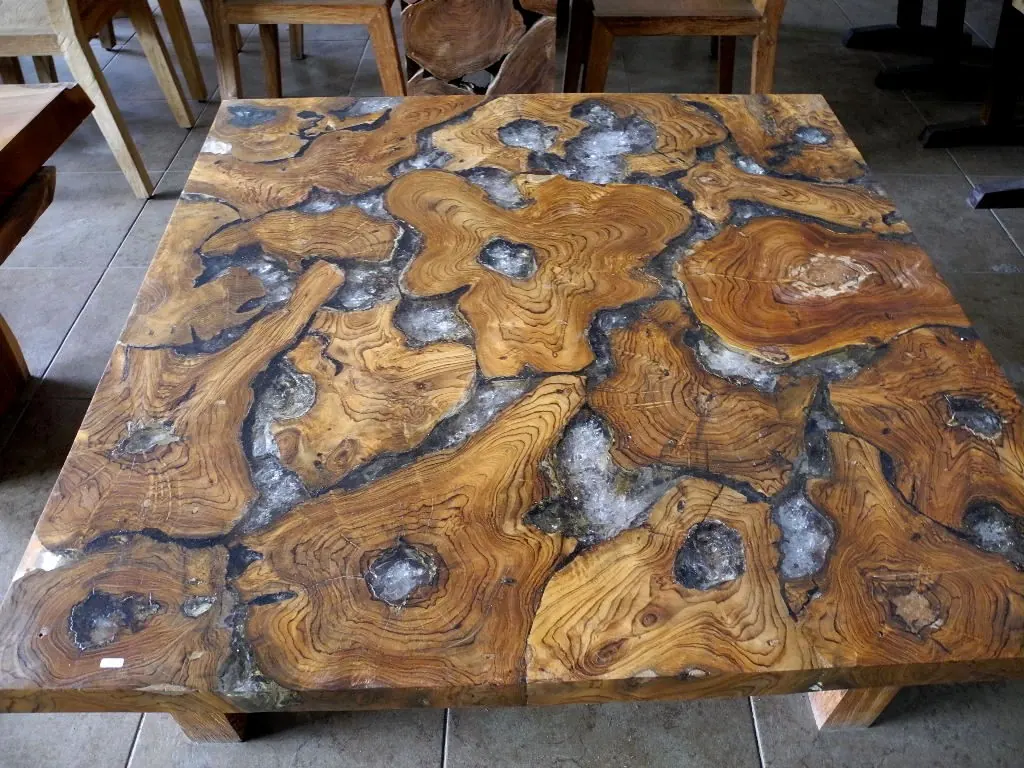 Resin coffee tablesThe way most people start. Irish made, about 90 cm: €450–€550.Coffee tables →
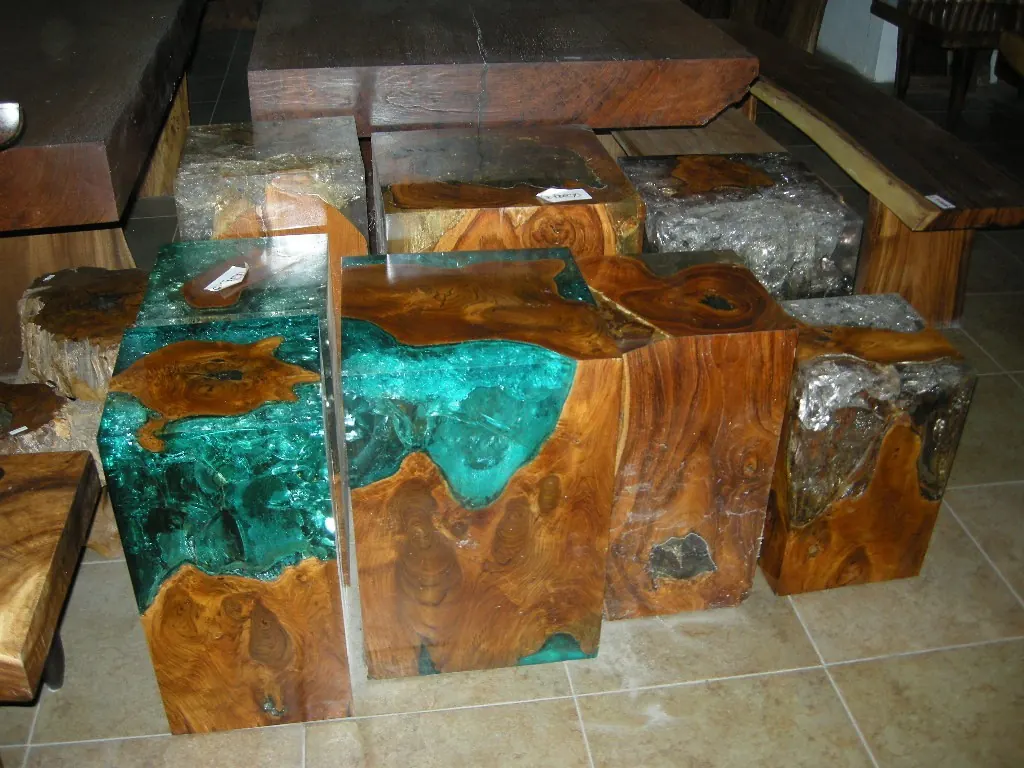 Custom or a DIY kitWhat a kit really takes, and which tables are worth doing yourself.Custom or DIY →
Questions
Questions we get asked
How do you clean a resin table?
A soft cloth with warm water and a drop of washing-up liquid, then dry it. No scouring pads, and no solvents such as acetone or nail polish remover on the finish.
Can I put a hot plate on a resin table?
No. Cured table resin starts to soften at about 40 to 60°C, so a hot pan, a hot plate or a mug straight from the kettle can mark it. Use mats and coasters. A mark in the resin can be sanded and polished out.
Does epoxy resin go yellow?
All epoxy yellows a little in strong sunlight over time: no epoxy is fully UV resistant. Table resins carry UV absorbers, and a polyurethane topcoat helps. Keep the table out of strong direct sun and it holds its look for years indoors.
Can scratches be removed?
Fine ones polish out; deeper ones can be sanded and re-polished.
Can a resin table go outside?
Not as a rule. Casting resins are made for indoor furniture: sun and frost work on both the resin and the wood. A covered, shaded spot is the most you should ask of one.
Design your resin table
One Irish maker gets your design and comes back with a price. Nothing is ordered until you say yes.