
Guide · resin
Epoxy Resin for Tables
Tables use a casting (deep pour) epoxy, poured about 2 to 5 cm at a time and fully cured in 7 to 14 days. Cured, it starts to soften at about 40 to 60°C, so hot pans go on a mat, and no epoxy is fully UV resistant, so keep it out of strong direct sun.
The resin in a table, in plain words: pours, curing, heat, sunlight and scratches.
Free, no obligation. One Irish maker gets your design, not a list.
- 2–5 cmof resin a pour
- 7–14 daysto fully cure
- 40–60°Cwhere it starts to soften
- D 80–87Shore hardness
Design your table
Design your resin table
Eight quick questions. The sketch changes as you pick. When you send it, one Irish resin table maker gets your design and comes back to you with a price.
Step 1 of 3
Step 2 of 3
Drawing your table. This takes 20 to 50 seconds.
Your request is already through, so you can close this page if you need to.
That's an AI concept, not a drawing to build from. Every slab is different: the maker shows you the real boards before anything is cut.
We couldn't do this one. Some photos don't work: a clearer, wider shot in daylight usually does.
Your request is in: you'll still get a call with a price.
The facts
Table resin in numbers
| Property | Typical for table casting resin | What it means at home |
|---|---|---|
| Pour depth | About 2 to 5 cm a layer, by grade | Thick tables are poured in layers, never in one go |
| Between layers | 12 hours to 72 hours | A river table can't be rushed |
| Full cure | 7 to 14 days | It's sanded and finished only after this |
| Heat | Softens from about 40 to 60°C | Hot pans and mugs need a mat |
| Sunlight | No epoxy is fully UV resistant | Keep it out of strong direct sun |
| Hardness | Shore D 80 to 87 | Hard, but it scratches like any gloss finish |
These come from resin makers' own technical sheets for casting resins. A maker picks the grade by the depth of the river: thin grades for seams and coatings, deep pour grades for rivers.
Yellowing
Does epoxy go yellow?
Does epoxy resin go yellow?
All epoxy yellows a little in strong sunlight over time: no epoxy is fully UV resistant. Table resins carry UV absorbers, and a polyurethane topcoat helps. Keep the table out of strong direct sun and it holds its look for years indoors.
Pouring too deep at once also yellows resin: it overheats as it cures. That's a making fault, not age, and it's why makers pour in layers.
Clear and pale resins show yellowing first; blue, green and black hide it.
Heat and scratches
Hot plates and scratches
No. Cured table resin starts to soften at about 40 to 60°C, so a hot pan, a hot plate or a mug straight from the kettle can mark it. Use mats and coasters. A mark in the resin can be sanded and polished out.
Scratches in the resin are like scratches in any gloss finish: fine ones polish out, deeper ones can be sanded and re-polished by the maker. A polyurethane topcoat makes the surface harder to scratch.
More on looking after a resin table.
Resin tables
More on resin tables
Every table is made to order around real slabs. Start with the one you want.
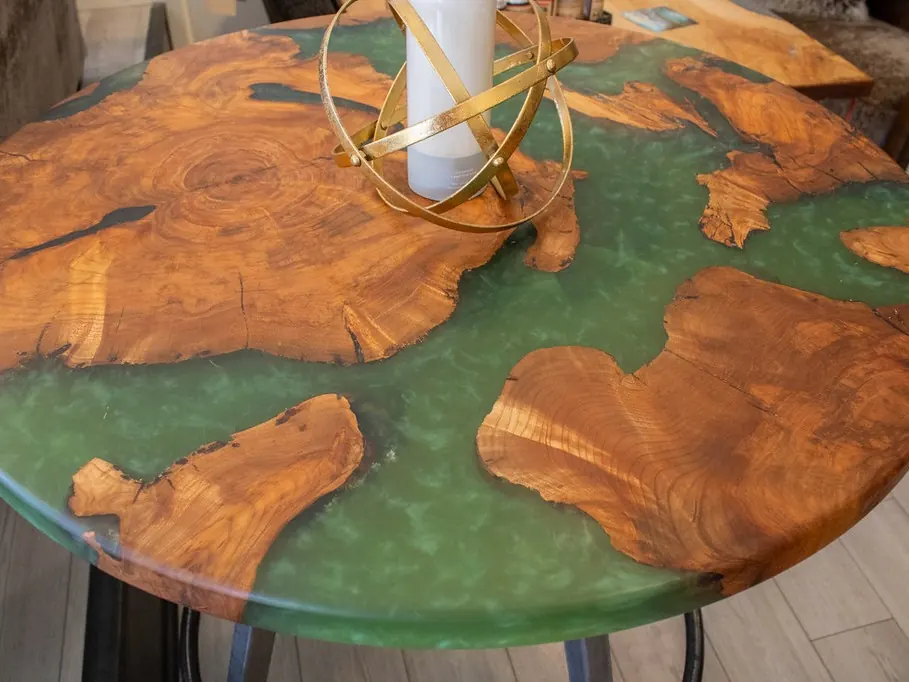 River tablesTwo live edge slabs with resin poured between them. A 2.5 m river dining table: €4,000–€5,100.River tables →
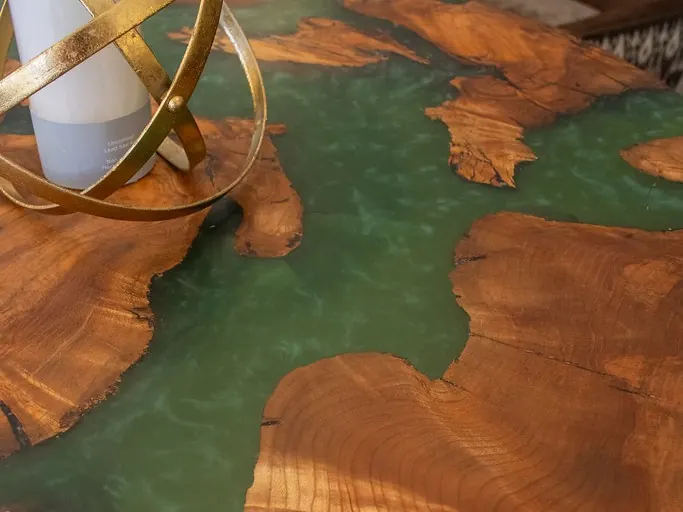 Care and maintenanceCleaning, mats, sunlight, oiling the wood and polishing out scratches.Care →
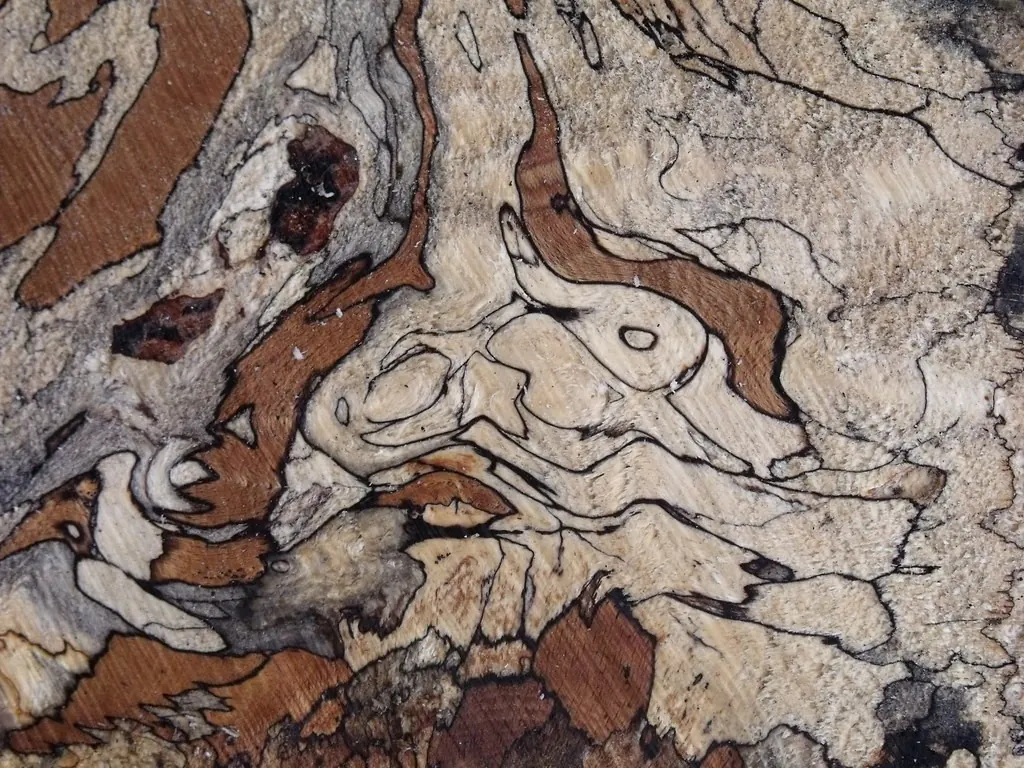 Wood for resin tablesOak, ash, elm, walnut and spalted beech: which Irish slabs, and what each costs.Wood choices →
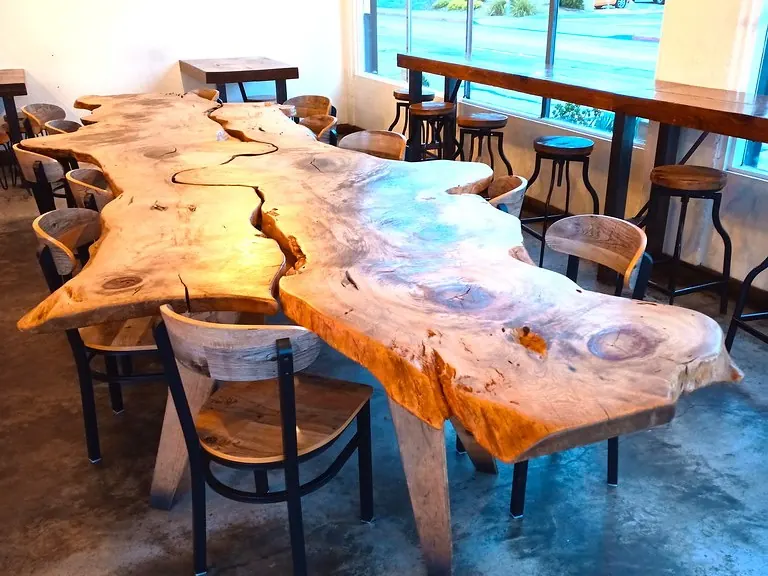 Resin dining tablesTables for 4 to 10. Live edge for 6 in oak: €1,800–€3,200 before resin.Dining tables →
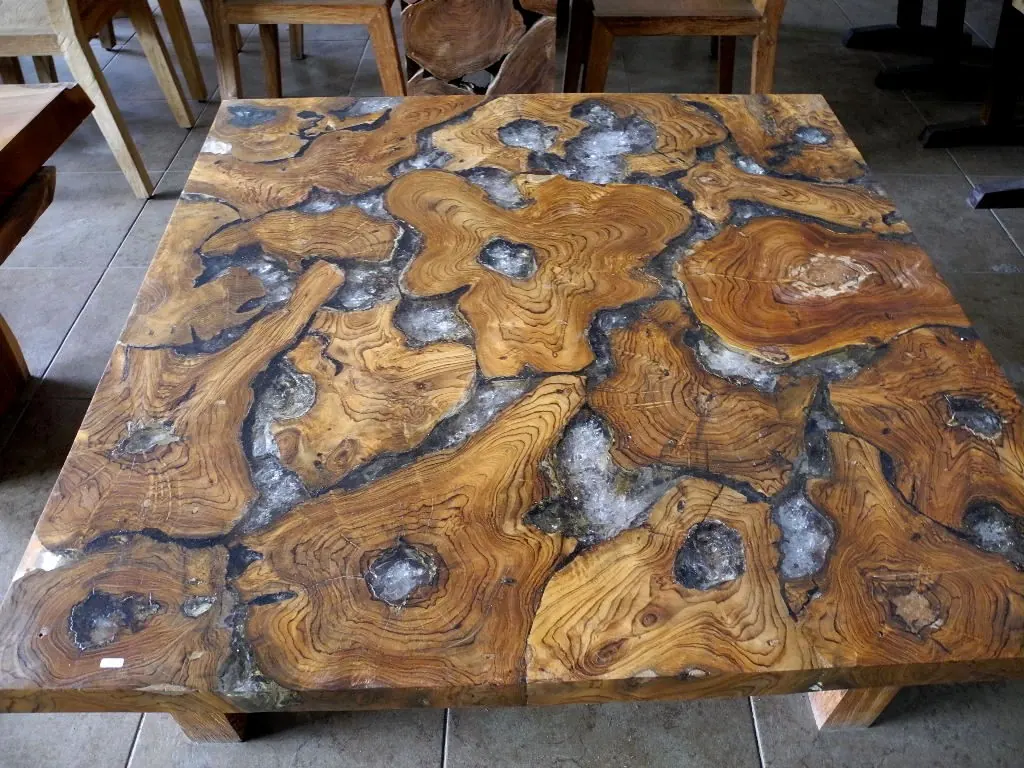 Resin coffee tablesThe way most people start. Irish made, about 90 cm: €450–€550.Coffee tables →
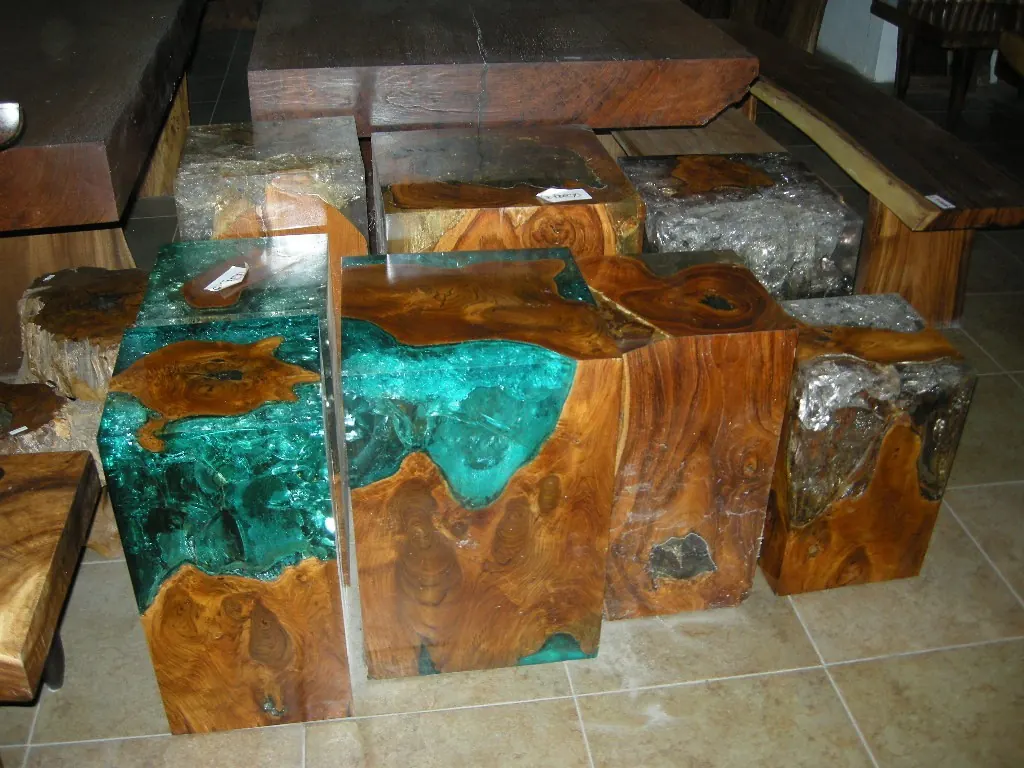 Custom or a DIY kitWhat a kit really takes, and which tables are worth doing yourself.Custom or DIY →
Questions
Questions we get asked
What resin is used for river tables?
A casting (deep pour) epoxy, made to go in thick layers without overheating.
Does epoxy resin go yellow?
All epoxy yellows a little in strong sunlight over time: no epoxy is fully UV resistant. Table resins carry UV absorbers, and a polyurethane topcoat helps. Keep the table out of strong direct sun and it holds its look for years indoors.
Can I put a hot plate on a resin table?
No. Cured table resin starts to soften at about 40 to 60°C, so a hot pan, a hot plate or a mug straight from the kettle can mark it. Use mats and coasters. A mark in the resin can be sanded and polished out.
Does a resin table scratch?
It can, like any gloss finish. Fine scratches polish out; deeper ones can be sanded and re-polished.
Is epoxy resin safe on a table?
Fully cured, it's a hard, inert surface. The care is in the making: gloves, eye protection and ventilation while the resin is liquid.
Design your resin table
One Irish maker gets your design and comes back with a price. Nothing is ordered until you say yes.